
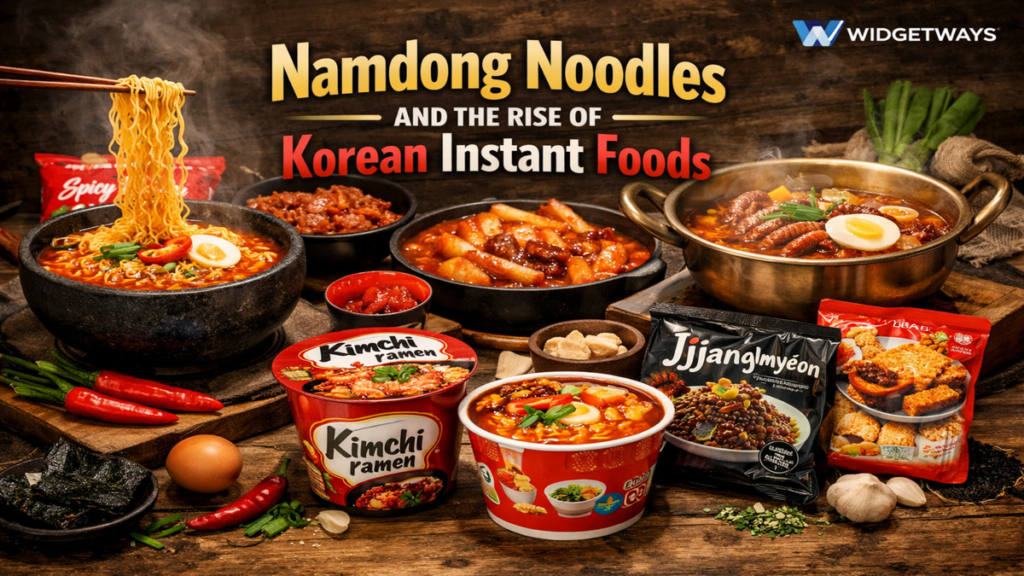

When I first examined the rise of Namdong noodles, it became clear that the product represents much more than another instant meal on a crowded supermarket shelf. It embodies the convergence of global food culture, Korean culinary influence, and the modern consumer’s demand for convenience without sacrificing flavor. Namdong noodles are Korean-inspired instant noodles introduced by Unilever in 2025, designed to capture the deep, spicy character of Korean stew traditions while remaining accessible to busy consumers around the world. The brand features flavors inspired by jjigae, the rich and aromatic stews that play a central role in Korean home cooking. Within minutes, consumers can prepare a bowl that mirrors some of the layered flavors found in traditional Korean dishes.
The emergence of Namdong noodles reflects the broader global fascination with Korean cuisine that has accelerated over the past two decades. As Korean pop culture, cinema, and television gained worldwide audiences, curiosity about Korean food expanded alongside it. Grocery stores across Europe and North America began stocking kimchi, gochujang chili paste, and Korean ramen brands that once could only be found in Asian markets. Namdong noodles enter this evolving culinary landscape as a bridge between traditional Korean flavors and modern convenience food. By combining adjustable spice levels, recognizable ingredients, and rapid preparation, the brand aims to satisfy both seasoned fans of Korean cuisine and newcomers eager to explore its bold flavors.
The Historical Roots of Korean Noodle Culture
Korean noodles possess a long and intricate culinary history that stretches back centuries, shaped by geography, trade, and cultural exchange. While rice historically dominated the Korean diet, wheat noodles became prominent in specific regions where wheat cultivation was more practical. Over time, noodles developed deep symbolic meaning within Korean culture. Long strands of noodles traditionally represent longevity and continuity, which is why they are often served at birthdays, weddings, and other celebratory events.
One of the most iconic traditional Korean noodle dishes is naengmyeon, a cold buckwheat noodle soup originating from the northern Korean Peninsula. The dish is served in a chilled broth made from beef stock or dongchimi radish water kimchi, often topped with slices of pear, cucumber, boiled egg, and cold beef. The refreshing contrast of icy broth and chewy noodles makes it particularly popular during hot summer months.
Another important noodle dish is bibim-guksu, which features thin wheat noodles tossed in a spicy sauce made with gochujang chili paste, sesame oil, garlic, and vinegar. Unlike broth-based noodle dishes, bibim-guksu emphasizes bold seasoning and a balance of spicy, sweet, and tangy flavors. Meanwhile, jajangmyeon, a noodle dish topped with thick black bean sauce, emerged in the port city of Incheon in the late nineteenth century after Chinese migrants introduced northern Chinese wheat noodles to Korea. Over time, the dish evolved into a distinctly Korean-Chinese staple enjoyed throughout the country.
These diverse noodle traditions illustrate how Korean cuisine blends indigenous techniques with outside influences. Modern instant noodle products, including Namdong noodles, continue this pattern by translating traditional flavors into forms that suit contemporary lifestyles.
The Development of Namdong Noodles
Namdong noodles were launched as part of Unilever’s strategy to expand its presence in the growing global instant noodle market. The brand was developed to capture the essence of Korean stew flavors while maintaining the convenience expected from instant noodles. The name “Namdong” references a district in Incheon, South Korea, reflecting the brand’s attempt to anchor its identity in Korean culinary heritage.
The initial product lineup included several varieties inspired by jjigae, a category of Korean stews known for their rich broths and bold seasoning. These varieties include beef jjigae noodles, chicken jjigae noodles, and kimchi jjigae noodles. Each flavor attempts to replicate the savory depth of traditional Korean soups using powdered seasoning blends that combine chili flakes, garlic, fermented ingredients, and umami-rich spices.
Unlike many instant noodles that come with a single seasoning packet, Namdong noodles feature a customizable spice system. Each package contains a separate chili mix that allows consumers to control the intensity of the heat. This design acknowledges the wide range of spice tolerance among global consumers. Some diners prefer subtle warmth, while others seek the intense chili heat commonly associated with Korean cuisine.
The brand launched initially in European supermarkets before gradually expanding into additional markets. Early marketing campaigns highlighted the cultural inspiration behind the product while emphasizing its practicality for quick lunches, late-night snacks, and busy schedules.
Global Consumption of Instant Noodles
Instant noodles represent one of the most widely consumed convenience foods on the planet. According to data from the World Instant Noodles Association, global consumption exceeded 120 billion servings annually in recent years. The popularity of instant noodles stems from their affordability, portability, and rapid preparation time.
The history of instant noodles dates back to 1958, when Taiwanese-Japanese inventor Momofuku Ando introduced the first commercially successful instant ramen product in Japan. His invention revolutionized food preparation by allowing consumers to create a hot meal simply by adding boiling water. Over the following decades, instant noodles spread throughout Asia and eventually across the globe.
Today, the instant noodle industry has diversified dramatically. Premium ramen brands, regional flavor variations, and gourmet-inspired noodle cups now compete alongside traditional budget options. In countries such as South Korea, Japan, China, and Indonesia, instant noodles have become deeply embedded in everyday eating habits.
Namdong noodles enter this mature market by focusing on flavor authenticity and cultural storytelling. Instead of positioning itself purely as a cheap meal, the brand emphasizes culinary inspiration and customizable spice levels. This approach reflects changing consumer expectations, especially among younger demographics who seek both convenience and culinary exploration.
The Influence of the Korean Wave on Global Food Trends
The growing popularity of Korean food cannot be separated from the broader cultural phenomenon known as the Korean Wave, or Hallyu. Beginning in the late 1990s, Korean television dramas, pop music, and cinema began attracting international audiences. Over time, this cultural export expanded dramatically, influencing fashion, language, and food preferences worldwide.
When viewers watch Korean dramas, they frequently encounter scenes involving food. Characters share bowls of ramen during late-night conversations, gather around barbecue grills, or enjoy street food from bustling market stalls. These moments often spark curiosity among global audiences unfamiliar with Korean cuisine.
The rise of social media further amplified this interest. Viral challenges involving extremely spicy Korean ramen captured the attention of millions of viewers on platforms like YouTube and TikTok. Influencers and food bloggers began reviewing Korean snacks, exploring Korean restaurants, and cooking Korean dishes at home.
This surge in cultural visibility created a favorable environment for products like Namdong noodles. Consumers who previously had little exposure to Korean flavors suddenly became eager to try them. Grocery stores responded by expanding their international food sections, introducing kimchi, Korean sauces, and various noodle brands.
Namdong noodles capitalize on this curiosity by offering a simplified introduction to Korean-style flavors without requiring specialized ingredients or cooking skills.
Manufacturing and Food Science Behind Instant Noodles
Although instant noodles appear simple, their production involves sophisticated food science and precise manufacturing processes. The noodles themselves are typically made from wheat flour, water, salt, and alkaline mineral salts known as kansui. These alkaline salts give noodles their distinctive springy texture and yellow color.
The dough is mixed, rolled into thin sheets, and cut into strands before being steamed. After steaming, the noodles are either deep-fried or air-dried to remove moisture and extend shelf life. Frying also creates tiny pores within the noodles, allowing them to rehydrate quickly when boiling water is added.
Seasoning packets play an equally important role. Manufacturers combine dehydrated vegetables, powdered broth bases, oils, and spices to create concentrated flavor profiles. In the case of Namdong noodles, seasoning blends attempt to mimic the fermented, savory characteristics of Korean jjigae.
Packaging technology also contributes to the convenience of instant noodles. Many modern noodle cups include heat-resistant containers that double as serving bowls. Some versions even incorporate foldable lids and integrated forks to enhance portability.
The result is a product that can travel long distances, remain shelf-stable for months, and deliver a consistent taste experience with minimal preparation.
Spice, Flavor, and Human Psychology
Spicy food holds a special fascination for many consumers, particularly in cultures where chili peppers play a central culinary role. Korean cuisine is known for its vibrant use of chili powder, fermented chili paste, and garlic-based sauces. These ingredients produce a distinctive balance of heat, umami, and tanginess.
From a scientific perspective, the sensation of heat in spicy foods comes from a chemical compound called capsaicin. Capsaicin activates pain receptors in the mouth that normally respond to heat and physical abrasion. When these receptors are triggered, the brain interprets the signal as burning.
Interestingly, the body often responds to this perceived pain by releasing endorphins, chemicals associated with pleasure and stress relief. This reaction can produce a mild sense of exhilaration, which partly explains why some people become enthusiastic about spicy foods.
Namdong noodles incorporate this psychological element through their adjustable spice packets. By allowing consumers to control the amount of chili they add, the product creates a personalized experience. Some individuals may choose a mild flavor profile, while others may pursue the thrill of intense heat.
This customization reflects broader trends in food culture, where diners increasingly seek interactive and individualized dining experiences.
Changing Consumer Expectations in the Instant Food Market
The instant food industry has undergone significant transformation in recent years as consumer expectations evolve. Historically, instant meals were associated with low cost, minimal nutrition, and utilitarian convenience. Today, however, many consumers expect instant foods to deliver both flavor authenticity and cultural relevance.
Younger generations, particularly millennials and Generation Z, have grown up in multicultural environments where international cuisine is widely available. As a result, they are more willing to experiment with unfamiliar flavors and cooking styles. Instant noodle brands have responded by introducing regional variations inspired by Thai, Korean, Japanese, and Chinese culinary traditions.
Brand identity also plays a critical role in attracting modern consumers. Packaging design, storytelling, and digital marketing campaigns help create a sense of authenticity and cultural connection. Namdong noodles rely heavily on Korean-inspired imagery and flavor descriptions to evoke the experience of Korean cooking.
Another major trend involves customization. Consumers increasingly prefer products that allow them to adjust spice levels, add toppings, or combine ingredients according to personal preference. Namdong’s spice packet system aligns closely with this trend by giving diners control over their final flavor profile.
Nutritional Debates Surrounding Instant Noodles
Despite their popularity, instant noodles often face scrutiny from nutrition experts who question their health impact. Many instant noodle products contain high levels of sodium, refined carbohydrates, and flavor enhancers. Excessive consumption may contribute to dietary imbalances if not accompanied by other nutritious foods.
Nutrition researchers frequently emphasize moderation. Instant noodles can provide quick energy and satisfying flavor, but they typically lack sufficient fiber, vitamins, and protein when consumed alone. For this reason, many consumers enhance instant noodles by adding fresh vegetables, eggs, tofu, or meat.
Some manufacturers have begun responding to health concerns by introducing reduced-sodium formulas, air-dried noodles, and seasoning packets with fewer additives. The instant noodle industry continues to explore ways to balance convenience with improved nutritional profiles.
Namdong noodles encourage customization that may indirectly support more balanced meals. Consumers can easily add vegetables, mushrooms, or protein to their bowl, transforming a simple noodle cup into a more substantial dish.
Key Takeaways
Namdong noodles represent a modern interpretation of Korean culinary inspiration adapted for global convenience food markets. The brand reflects the broader global fascination with Korean cuisine that has emerged alongside the Korean Wave cultural phenomenon. Instant noodles remain one of the most widely consumed foods in the world, with billions of servings eaten annually. Namdong differentiates itself through adjustable spice levels, jjigae-inspired flavors, and marketing that highlights Korean food culture. Advances in food science and manufacturing allow instant noodles to deliver consistent flavor and texture with minimal preparation time. Consumer interest in bold international flavors continues to reshape the instant food industry. Although instant noodles face nutritional criticism, many consumers modify them with additional ingredients to create more balanced meals.
Conclusion
The story of Namdong noodles illustrates how food traditions evolve when they cross cultural and geographic boundaries. A product inspired by Korean stew flavors now appears on supermarket shelves thousands of miles from Seoul, offering consumers a quick introduction to one of the world’s most dynamic cuisines. The popularity of Korean food has grown dramatically over the past two decades, propelled by cultural exports ranging from music to television dramas. As curiosity about Korean culture expanded, so did interest in the flavors that define Korean cooking.
Namdong noodles stand at the intersection of tradition and innovation. They borrow inspiration from jjigae, one of Korea’s most beloved stew traditions, yet deliver those flavors through modern food manufacturing and global distribution networks. This combination reflects the broader transformation of convenience foods in the twenty-first century. Consumers increasingly expect instant meals to be flavorful, culturally meaningful, and customizable.
Noodles have always been among the most adaptable foods in the world. Whether served in Japanese ramen shops, Italian trattorias, Chinese street stalls, or Korean kitchens, they provide warmth, comfort, and familiarity. Namdong noodles simply represent the latest chapter in that long culinary journey.
Read: Chateaubriand Steak History and Culinary Guide
FAQs
What are Namdong noodles?
Namdong noodles are Korean-inspired instant noodles launched by Unilever in 2025. They are designed to replicate the flavors of Korean stew dishes known as jjigae while remaining quick and easy to prepare.
What flavors do Namdong noodles come in?
The primary flavors include beef jjigae, chicken jjigae, and kimchi jjigae. Each flavor attempts to capture the savory, spicy character of traditional Korean soups.
How do you cook Namdong noodles?
Preparation is simple. Boiling water is added to the noodles and seasoning packet, and the noodles typically cook in about four minutes before serving.
Are Namdong noodles very spicy?
They include a separate chili packet that allows consumers to control the level of spice according to personal preference.
Why are Korean instant noodles popular worldwide?
The global popularity of Korean culture, including K-pop and Korean television dramas, has increased interest in Korean food and flavors.