
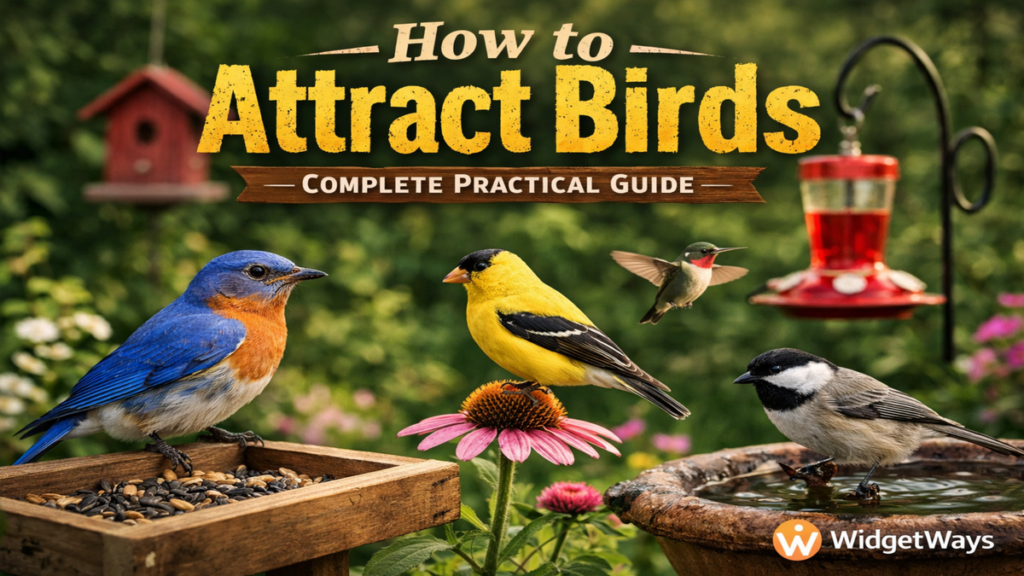

I have always found that attracting birds begins with a simple truth: birds come where their basic needs are met. If you provide food, water, shelter, and safety, they will arrive. For anyone searching how to attract birds, the answer lies not in a single trick but in creating an environment that mirrors their natural habitat. Whether it is a small balcony, a suburban garden, or a rural landscape, birds respond to consistency, diversity, and quiet presence.
Within the first steps, the essentials are clear. Install a feeder with appropriate seed, add a clean water source, and introduce plants that provide both food and cover. These foundational elements can transform even the most ordinary space into a haven for birdlife. But the deeper process goes further. Attracting birds is not only about bringing them closer. It is about understanding their behavior, migration patterns, and ecological roles.
Across the world, bird populations are shifting due to habitat loss and climate change. A 2019 study published in Science reported that North America alone has lost nearly three billion birds since 1970 (Rosenberg et al., 2019). This context makes backyard birding more than a hobby. It becomes a small act of conservation.
In this article, I explore how to attract birds effectively, responsibly, and sustainably, drawing on scientific research, expert advice, and practical strategies that anyone can apply.
Understanding What Birds Need

At its core, attracting birds is about meeting four essential needs: food, water, shelter, and safety. These elements form the foundation of any bird-friendly environment.
Food is the most obvious factor. Different species prefer different diets, ranging from seeds and nectar to insects and fruits. Providing a variety of options increases the likelihood of attracting diverse species.
Water is equally critical. Birds require clean water for drinking and bathing. Even a shallow dish can make a significant difference, particularly in urban areas where natural water sources are scarce.
Shelter provides protection from predators and harsh weather. Trees, shrubs, and nesting boxes all contribute to creating safe spaces for birds.
Safety is often overlooked. Birds avoid areas with excessive noise, human disturbance, or visible threats such as predators.
The National Audubon Society emphasizes that “a bird-friendly habitat replicates the conditions birds rely on in the wild.”
Understanding these needs is the first step toward creating an environment that birds will return to consistently.
Choosing the Right Feeders and Food
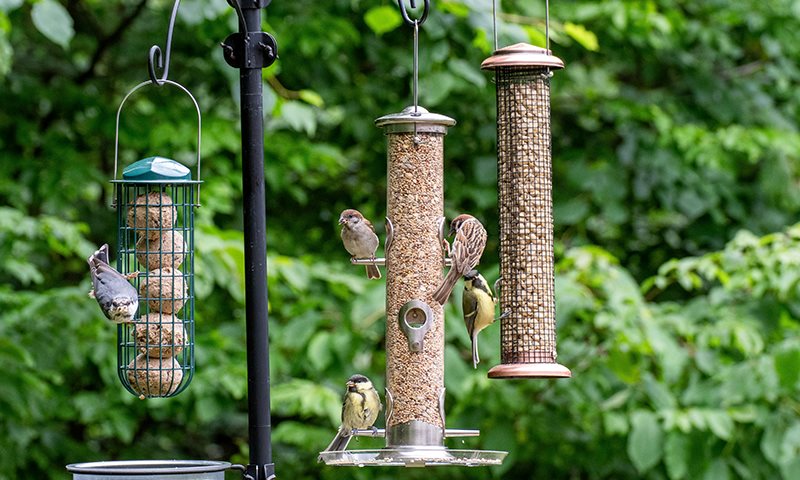
Not all feeders are created equal. The type of feeder and the food it contains can determine which birds visit your space.
Tube feeders are ideal for small birds like finches and chickadees, while hopper feeders attract a wider variety of species. Suet feeders are particularly effective in winter, providing high-energy food for woodpeckers and nuthatches.
Here is a comparison of common feeder types:
| Feeder Type | Best For | Food Type | Key Benefit |
|---|---|---|---|
| Tube Feeder | Small birds | Seeds | Controlled access |
| Hopper Feeder | Mixed species | Seeds | Larger capacity |
| Suet Feeder | Woodpeckers | Suet cakes | High energy |
| Nectar Feeder | Hummingbirds | Sugar solution | Attracts pollinators |
Seed choice also matters. Black oil sunflower seeds are widely recommended due to their high fat content and appeal to many species.
David Allen Sibley, author of The Sibley Guide to Birds, notes that “providing the right food is the single most effective way to attract birds” (Sibley, 2014).
Consistency is key. Birds rely on dependable food sources, so maintaining feeders regularly encourages repeat visits.
Native Plants and Natural Food Sources

While feeders are useful, native plants offer a more sustainable approach to attracting birds. These plants provide food, shelter, and nesting materials, supporting birds throughout their life cycles.
Berry-producing shrubs, such as holly and elderberry, attract species that rely on fruit. Flowering plants draw insects, which in turn attract insect-eating birds.
Douglas Tallamy, an entomologist and author, argues that “native plants are essential because they support the insects that birds depend on” (Tallamy, 2007).
Here is a comparison of plant types and their benefits:
| Plant Type | Bird Benefit | Example |
|---|---|---|
| Berry Shrubs | Food source | Elderberry |
| Flowering Plants | Attract insects | Coneflower |
| Trees | Shelter and nesting | Oak |
| Grasses | Seed production | Native grasses |
By incorporating native vegetation, gardeners create ecosystems rather than isolated feeding stations. This approach supports biodiversity and reduces reliance on artificial feeding.
Water Features and Their Impact
Water is often the missing element in bird-friendly spaces. A simple birdbath can significantly increase bird activity, especially during hot or dry periods.
Birds prefer shallow water, typically no more than two inches deep. Moving water, such as a small fountain or dripper, is particularly attractive because it signals freshness and safety.
The Cornell Lab of Ornithology notes that water features can attract species that might not otherwise visit feeders.
Regular maintenance is essential. Dirty water can spread disease, so birdbaths should be cleaned frequently.
Water also supports other wildlife, contributing to a broader ecological balance. In urban environments, where natural water sources are limited, this can be especially important.
Seasonal Strategies for Attracting Birds
Bird behavior changes throughout the year, influenced by migration, breeding cycles, and food availability. Adapting strategies to each season increases success.
| Season | Strategy | Expected Birds |
|---|---|---|
| Spring | Nesting materials, insects | Songbirds |
| Summer | Water sources, shade | Juveniles |
| Fall | High-energy foods | Migratory species |
| Winter | Suet, sheltered feeders | Resident birds |
In winter, high-fat foods help birds survive cold temperatures. In spring, providing nesting materials such as twigs and fibers supports breeding.
Kenn Kaufman, a birding expert, explains that “understanding seasonal needs allows you to anticipate what birds require at different times of the year” (Kaufman, 2005).
This adaptability ensures that bird-friendly spaces remain relevant year-round.
The Role of Quiet and Observation
Attracting birds is not only about providing resources. It is also about creating an environment where birds feel safe. Noise, sudden movements, and frequent disturbances can deter them.
Quiet observation encourages birds to settle and return. Over time, birds become accustomed to consistent, non-threatening human presence.
Roger Tory Peterson, a pioneering ornithologist, emphasized that “patience is the most important tool in birdwatching” (Peterson, 1980).
Observation also deepens understanding. By watching how birds interact with feeders, plants, and each other, individuals can refine their approach.
This process transforms bird attraction from a task into an ongoing relationship with nature.
Conservation and Ethical Considerations
Attracting birds carries responsibilities. Improper feeding or habitat design can have unintended consequences, such as spreading disease or attracting predators.
Best practices include:
- Cleaning feeders regularly
- Avoiding overcrowding
- Using appropriate food
The World Wildlife Fund highlights the importance of responsible wildlife interaction.
Climate change and habitat loss make these considerations even more critical. Backyard habitats can serve as small refuges, supporting bird populations in changing environments.
By approaching bird attraction ethically, individuals contribute to broader conservation efforts.
Takeaways
- Birds are attracted by food, water, shelter, and safety.
- Choosing the right feeders and seeds increases diversity.
- Native plants provide sustainable, long-term benefits.
- Water features significantly enhance bird activity.
- Seasonal adjustments improve effectiveness.
- Quiet observation fosters trust and repeat visits.
Conclusion
I see attracting birds as both a practical activity and a quiet form of stewardship. It begins with simple steps, a feeder, a bowl of water, a few plants. But over time, it becomes something more. It becomes a way of participating in the rhythms of the natural world.
In an era where urbanization and environmental change reshape ecosystems, even small actions can have meaningful impact. A backyard or balcony can become a refuge, a place where birds find resources and safety.
The process requires patience, attention, and care. Birds do not arrive instantly, and they do not stay without reason. But when the conditions are right, they return, bringing movement, sound, and life.
Attracting birds is not about control. It is about invitation. And in accepting that invitation, we reconnect with a part of the world that often feels distant, yet is always within reach.
Read: Caressa Suzzette Madden: The Private Life Behind an NBA Story
FAQs
What is the easiest way to attract birds?
Providing a feeder with sunflower seeds and a clean water source is the simplest and most effective starting point.
Do birds need water year-round?
Yes, birds require water in all seasons, including winter when natural sources may freeze.
Which plants attract the most birds?
Native plants that produce berries or attract insects are the most effective.
How often should feeders be cleaned?
Feeders should be cleaned at least once every two weeks, more frequently in warm weather.
Can birds become dependent on feeders?
Research suggests birds use feeders as supplements rather than sole food sources, maintaining natural foraging behavior.
References
Kaufman, K. (2005). Kingbird highway: The biggest year in the life of an extreme birder. Houghton Mifflin.
Peterson, R. T. (1980). A field guide to the birds. Houghton Mifflin.
Rosenberg, K. V., et al. (2019). Decline of the North American avifauna. Science, 366(6461), 120–124.
Sibley, D. A. (2014). The Sibley guide to birds. Knopf.
Tallamy, D. W. (2007). Bringing nature home: How native plants sustain wildlife in our gardens. Timber Press.
World Wildlife Fund. (2020). Living with wildlife. Retrieved from https://www.worldwildlife.org/
Cornell Lab of Ornithology. (2021). All about birds. Retrieved from https://www.allaboutbirds.org/