


I often find that many beginners encounter the term CXX and feel uncertain about what it truly represents. In practical programming environments, CXX is commonly associated with C++ source files, compiler settings, or system level configurations that define how C++ code is processed. In this detailed guide, I will walk through what CXX means, how it connects with C++ development, its technical foundation, compiler usage, file structures, build systems, advantages, limitations, and real world applications. This explanation aims to provide a deep and structured understanding for learners, developers, and technology enthusiasts.
Understanding the Meaning of CXX

CXX is frequently used as a shorthand reference for C++. In many development environments, especially in Unix based systems, CXX refers to the C++ compiler variable. For example, in build automation tools such as Makefiles, the variable CXX is defined to indicate which compiler should process C++ source code.
It is important to understand that CXX is not a separate programming language. Instead, it functions as a naming convention within development ecosystems. The connection between CXX and C++ becomes clear when examining how compilers interpret source files.
CXX as a Compiler Variable
In build systems, developers often see lines like:
CXX = g++
This line assigns the C++ compiler to the CXX variable. Whenever the build process compiles C++ files, it refers to this variable to know which tool to use.
This design provides flexibility. If a developer wants to switch from one compiler to another, they simply change the value assigned to CXX instead of rewriting multiple commands.
The Relationship Between CXX and C++
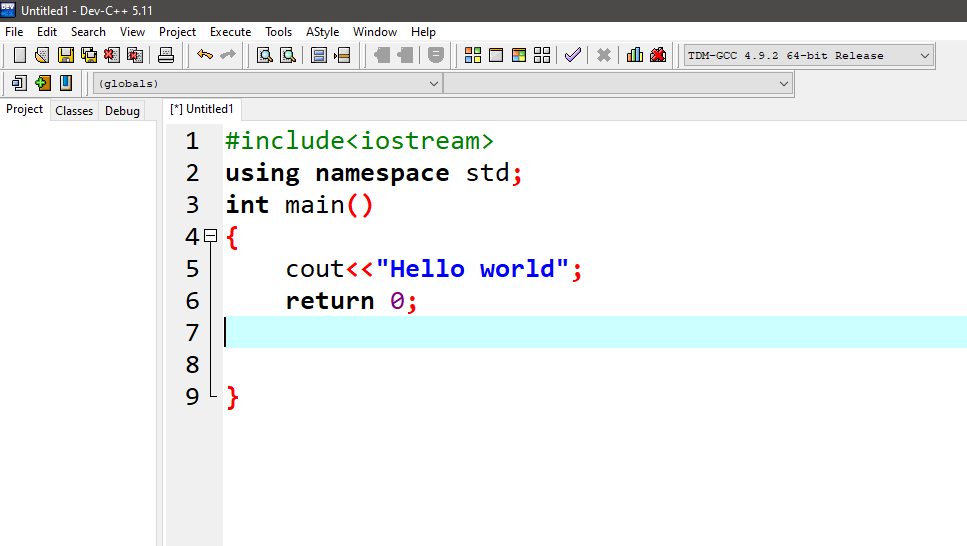
C++ is a powerful, high performance programming language widely used in software development. CXX represents the operational aspect of compiling C++ programs. When a developer writes C++ code, it must be converted into machine readable instructions. The compiler specified by CXX performs this translation.
Why C++ Needs Compilation
C++ is a compiled language, meaning source code must be transformed into executable form before running. This compilation process includes:
- Preprocessing
- Compilation
- Linking
Each stage ensures that the program is transformed into optimized machine code.
Structure of a C++ Program Managed by CXX
To understand CXX in context, I want to explain how a simple C++ program is structured and compiled.
Basic Program Structure
| Component | Purpose |
|---|---|
| Header Files | Provide declarations for functions and classes |
| Main Function | Entry point of the program |
| Variables | Store data values |
| Functions | Perform tasks |
| Output Statements | Display results |
A typical C++ file may use extensions such as .cpp, .cc, or .cxx. The .cxx extension directly relates to the shorthand form CXX.
Example File Extensions
| Extension | Meaning | Usage Context |
|---|---|---|
| .cpp | C++ source file | Common in Windows |
| .cc | C++ source file | Unix based systems |
| .cxx | C++ source file | Alternative naming style |
The .cxx extension demonstrates how CXX terminology appears directly in file naming conventions.
Compilation Workflow Using CXX
The compilation process is critical in understanding the technical significance of CXX.
Step 1: Writing Source Code
Developers create source files containing C++ instructions. These files may include logic, algorithms, data structures, and user interactions.
Step 2: Invoking the Compiler
The CXX variable specifies which compiler executes the compilation. Popular compilers include:
- GNU g++
- Clang++
- Microsoft Visual C++
Step 3: Generating Object Files
The compiler converts source code into object files. These files contain machine code but are not yet complete programs.
Step 4: Linking
The linker combines object files and libraries into a final executable.
This workflow ensures efficiency and performance.
Build Systems and the Role of CXX
Modern software development relies on automation tools. CXX plays a central role in these tools.
Makefile Example Structure
| Variable | Purpose |
|---|---|
| CC | C compiler |
| CXX | C++ compiler |
| CFLAGS | C compiler flags |
| CXXFLAGS | C++ compiler flags |
By defining CXXFLAGS, developers can control optimization levels, debugging options, and warning messages.
Advantages of Using CXX in Build Systems
- Simplifies compiler switching
- Maintains consistent build processes
- Improves scalability for large projects
- Supports cross platform development
Core Features of C++ Associated with CXX
Since CXX is tightly connected to C++, I want to explain the core features that make C++ powerful.
Object Oriented Programming
C++ supports classes and objects, enabling developers to structure programs efficiently.
Memory Management
C++ allows manual memory control through pointers and dynamic allocation. This provides performance advantages but requires responsibility.
Standard Template Library
The Standard Template Library offers pre built data structures such as vectors, maps, and lists.
Performance Efficiency
C++ is known for speed and low level hardware interaction.
Practical Applications of CXX Based Development
CXX driven C++ development is used across various industries.
Software Applications
Desktop software, productivity tools, and multimedia applications often rely on C++.
Game Development
Many game engines use C++ for performance critical components.
Embedded Systems
C++ is widely used in embedded systems where hardware control is essential.
Financial Systems
High frequency trading platforms depend on C++ speed and reliability.
Comparison Between C and CXX Environments
| Feature | C (CC) | C++ (CXX) |
|---|---|---|
| Programming Style | Procedural | Object Oriented |
| Standard Library | Limited | Extensive STL |
| Memory Management | Manual | Manual with OOP support |
| Performance | High | High |
| Abstraction Support | Minimal | Strong |
This comparison highlights why CXX environments extend beyond traditional C programming.
Advantages of Working with CXX Systems
I believe CXX based workflows offer several technical benefits.
- Flexibility in compiler selection
- Enhanced performance control
- Strong ecosystem support
- Compatibility with multiple operating systems
- Scalability for large software systems
These advantages make CXX configurations valuable in professional development.
Challenges and Considerations
Despite its strengths, CXX development requires careful handling.
Complexity
C++ syntax and memory management can be complex for beginners.
Compilation Errors
Compiler errors may be detailed and technical, requiring patience to resolve.
Build Configuration
Large projects often require detailed configuration management.
Optimization Flags in CXX
Compiler flags improve performance and debugging capabilities.
| Flag | Purpose |
|---|---|
| -O2 | Moderate optimization |
| -O3 | High optimization |
| -g | Include debugging information |
| -Wall | Enable warnings |
These flags are typically defined using CXXFLAGS.
Cross Platform Development
CXX allows developers to compile code across multiple systems. By changing compiler configurations, the same codebase can run on:
- Windows
- Linux
- macOS
This flexibility strengthens software portability.
Evolution of C++ and CXX Usage
C++ continues to evolve with updated standards such as:
- C++11
- C++14
- C++17
- C++20
Each standard introduces new features, including improved concurrency, lambda expressions, and template enhancements.
CXX variables ensure that the appropriate compiler supports the selected standard.
Security Considerations in CXX Development
Secure coding practices are essential.
Common Risks
- Buffer overflows
- Memory leaks
- Undefined behavior
Prevention Techniques
- Using smart pointers
- Implementing bounds checking
- Leveraging modern C++ features
Security awareness strengthens software reliability.
Learning Path for Beginners
For those starting with CXX based development, I recommend:
- Understanding basic C++ syntax
- Practicing simple programs
- Learning object oriented concepts
- Studying build systems
- Exploring debugging tools
Consistency and experimentation are key.
Example Development Workflow
| Stage | Activity |
|---|---|
| Planning | Define project requirements |
| Coding | Write C++ source files |
| Configuring Build | Set CXX and CXXFLAGS |
| Compiling | Generate object files |
| Linking | Produce executable |
| Testing | Verify output and performance |
This structured approach ensures organized development.
Future of CXX and C++ Development
As computing evolves, C++ remains relevant in high performance domains such as artificial intelligence infrastructure, cloud services, robotics, and advanced simulations.
Modern standards improve safety and usability while preserving efficiency. CXX configurations will continue to serve as essential components in build systems and software pipelines.
Conclusion
From my perspective, CXX represents more than a simple variable name. It symbolizes the operational foundation of C++ development within build systems and compilation workflows. By understanding its role in compiler configuration, file management, optimization, and cross platform development, developers gain greater control over how their software is built and executed. Mastery of CXX related environments empowers programmers to build efficient, scalable, and high performance applications across industries.
Read: Flowxd Workflow Automation and Productivity Guide
FAQs
1. What does CXX stand for in programming?
CXX commonly represents the C++ compiler variable used in build systems and automation tools.
2. Is CXX a separate programming language?
No, CXX is not a language. It refers to configurations or variables associated with C++ compilation.
3. Why are some C++ files named with .cxx?
The .cxx extension is an alternative naming convention for C++ source files.
4. How can I change the compiler in a CXX setup?
You can modify the CXX variable in the build configuration to point to a different compiler.
5. Is CXX relevant for beginners?
Yes, understanding CXX helps beginners learn how C++ programs are compiled and built.