
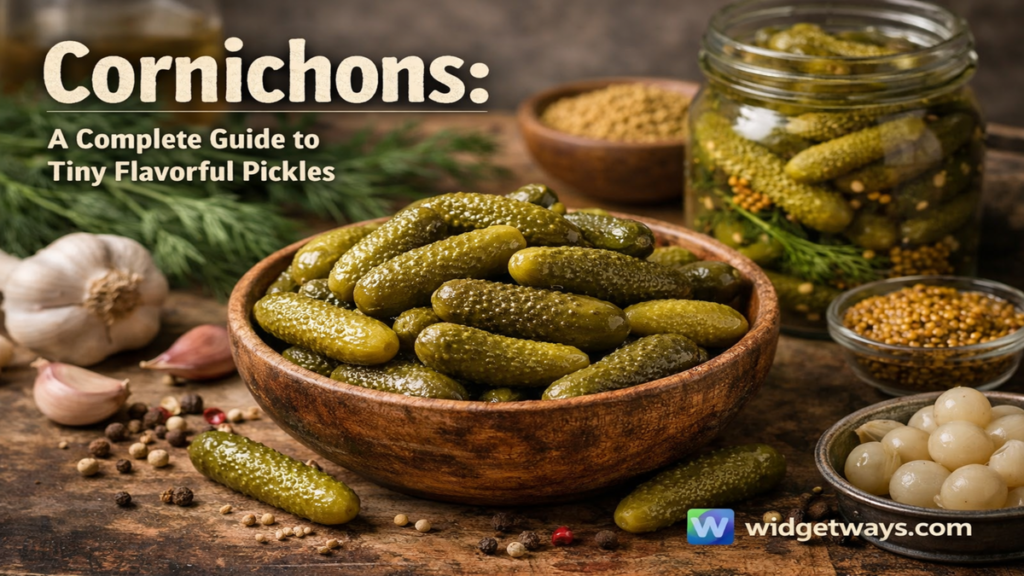

I have always believed that small ingredients often create the biggest impact on flavor, and cornichons prove that beautifully. These tiny, crisp pickles may look simple, yet they carry a bold personality that can elevate everything from sandwiches to gourmet platters. In this detailed guide, I will explore what cornichons are, how they are made, their nutritional value, culinary uses, storage tips, and much more so you can fully appreciate these sharp and crunchy delights.
What Are Cornichons?

Cornichons are very small pickled cucumbers that are harvested early, before they fully mature. They are traditionally associated with French cuisine, where they are prized for their firm texture and bright, tangy taste. Unlike regular dill pickles, cornichons are smaller, thinner, and typically more sour than sweet.
The word “cornichon” comes from French and refers specifically to these petite cucumbers. They are usually pickled in vinegar along with herbs such as tarragon, thyme, bay leaves, and sometimes small onions or mustard seeds. Their flavor profile is distinctly sharp and slightly acidic, making them ideal for balancing rich or fatty foods.
Because they are picked at an early stage, cornichons maintain a dense crunch that does not soften easily during the pickling process. This textural integrity is one of their most appreciated qualities.
The History of Cornichons
Pickling vegetables is an ancient preservation method that dates back thousands of years. Cucumbers have been pickled in various cultures across Asia, the Middle East, and Europe. However, cornichons became particularly prominent in France, where culinary traditions emphasize refined flavors and complementary textures.
In French charcuterie culture, cornichons are considered essential. They often accompany pâtés, cured meats, and cheeses. The acidity of the pickle cuts through the richness of these foods, refreshing the palate and preventing flavor fatigue.
Over time, cornichons spread beyond France and became popular worldwide. Today, they are widely available in supermarkets and specialty stores, though traditional French-style versions remain highly valued for their authenticity and balanced taste.
How Cornichons Differ From Regular Pickles
Many people assume cornichons are simply miniature pickles, but there are important differences. The table below highlights these distinctions.
| Feature | Cornichons | Regular Pickles |
|---|---|---|
| Size | Very small, 1 to 2 inches | Larger, 3 to 6 inches |
| Harvest Stage | Picked very young | Picked at fuller maturity |
| Flavor | Sharper, more acidic | Can be sour or sweet |
| Sweetness Level | Usually not sweet | Often includes sugar |
| Texture | Very firm and crunchy | Slightly softer |
| Culinary Role | Paired with rich foods | General snacking and sandwiches |
The main takeaway is that cornichons focus on sharp acidity rather than sweetness. This makes them particularly useful in refined dishes where balance is crucial.
How Cornichons Are Made
The process of making cornichons is simple but requires careful attention to detail.
Harvesting
Farmers harvest the cucumbers when they are still very small. Timing is critical because even a few extra days of growth can change the texture and size significantly.
Cleaning and Sorting
After harvesting, the cucumbers are washed thoroughly and sorted by size. Only the smallest and firmest cucumbers are selected for traditional cornichons.
Brining
The cucumbers are often soaked briefly in salt to draw out excess moisture. This step helps maintain their crunch.
Pickling Solution
A vinegar-based solution is prepared, typically using white wine vinegar or distilled vinegar. Herbs and spices such as:
- Tarragon
- Mustard seeds
- Peppercorns
- Bay leaves
- Garlic
are added to enhance flavor.
Fermentation and Storage
The cucumbers are submerged in the vinegar solution and sealed in jars. They are then left to develop flavor over several weeks. Unlike some pickles that rely heavily on fermentation, cornichons primarily gain their taste from the vinegar infusion.
The result is a bright, crisp pickle with complex herbal notes.
Nutritional Profile of Cornichons

Cornichons are low in calories but rich in flavor. While they are not a major source of macronutrients, they do offer certain dietary benefits.
Below is an approximate nutritional overview per 100 grams.
| Nutrient | Approximate Value |
|---|---|
| Calories | 15 to 20 kcal |
| Carbohydrates | 3 to 4 g |
| Fiber | 1 g |
| Sodium | 800 to 1200 mg |
| Vitamin K | Moderate amount |
| Potassium | Small amount |
Because of the pickling process, sodium content can be relatively high. Individuals monitoring salt intake should consume cornichons in moderation. However, their low calorie count makes them a guilt-free flavor enhancer.
Health Benefits of Cornichons
Although cornichons are not a superfood, they do contribute positively when eaten as part of a balanced diet.
Low Calorie Flavor Boost
Cornichons provide strong flavor with very few calories. Adding them to meals can enhance satisfaction without significantly increasing caloric intake.
Digestive Support
The vinegar in cornichons may support digestion by stimulating stomach acid production. Some traditional pickling methods also include mild fermentation, which can introduce beneficial bacteria.
Antioxidant Content
Cucumbers naturally contain antioxidants such as beta-carotene and vitamin C. While pickling may reduce some nutrient levels, small amounts remain.
Appetite Control
Their intense flavor and crunch can increase meal satisfaction. The sour taste can also reduce cravings for overly sweet snacks.
Culinary Uses of Cornichons
Cornichons are incredibly versatile and can be used in numerous ways.
Charcuterie Boards
They are classic companions to cured meats like salami and prosciutto. Their acidity balances fatty flavors and refreshes the palate between bites.
Sandwiches and Burgers
Finely chopped cornichons can be added to sandwiches for extra crunch and tang. They are also key ingredients in tartar sauce and remoulade.
Salads
Chopped cornichons add brightness to potato salad, egg salad, and pasta salad. Their sharpness cuts through creamy dressings.
Sauces and Dressings
Blending cornichons into vinaigrettes or yogurt-based sauces creates a punchy, refreshing flavor.
Cooked Dishes
In some traditional dishes, cornichons are added to stews or meat dishes to provide contrast. Their acidity can lift heavy sauces and add depth.
Cornichons in French Cuisine
In France, cornichons are more than a garnish. They are integral to several traditional dishes.
They are commonly served alongside pâté and terrines. When paired with rich liver pâté, their acidity cleanses the palate and enhances each bite. They also appear in steak tartare preparations, where finely chopped cornichons add both texture and brightness.
French households often keep a jar of cornichons in the refrigerator, using them regularly in both casual meals and formal dining settings.
How to Choose Quality Cornichons
When buying cornichons, look for the following qualities:
- Uniform small size
- Firm texture
- Clear brine
- Minimal artificial additives
Reading ingredient labels is important. Traditional cornichons typically contain cucumbers, vinegar, water, salt, and natural herbs. Avoid products with excessive sugar if you prefer the classic tart flavor.
Storing Cornichons Properly
Proper storage ensures maximum freshness and crunch.
Before Opening
Store unopened jars in a cool, dark place such as a pantry.
After Opening
Refrigerate immediately after opening. Always ensure the cornichons remain submerged in brine to prevent spoilage.
Shelf Life
Unopened jars can last for many months. Once opened, they generally stay fresh for several weeks if refrigerated properly.
Homemade Cornichons: A Simple Guide
Making cornichons at home can be a rewarding experience.
Ingredients
- Small cucumbers
- White vinegar
- Water
- Salt
- Fresh herbs
- Garlic
Basic Steps
- Wash cucumbers thoroughly.
- Prepare vinegar brine with salt.
- Place cucumbers and herbs into sterilized jars.
- Pour hot brine over them.
- Seal and let sit for several weeks.
Homemade versions allow you to adjust salt levels and experiment with spices such as chili flakes or coriander seeds.
Common Mistakes to Avoid
When working with cornichons, a few mistakes can affect quality.
- Using overgrown cucumbers
- Not sterilizing jars properly
- Adding too much sugar
- Allowing pickles to float above brine
Attention to detail preserves their characteristic crunch and sharp taste.
Environmental and Agricultural Aspects
Cornichons require careful cultivation. Since they are harvested early, farmers must monitor growth closely. This can increase labor compared to standard cucumber production.
However, cucumbers generally require moderate water and grow efficiently in warm climates. Supporting local growers who practice sustainable agriculture can reduce environmental impact.
Why Cornichons Remain Popular
Despite changing food trends, cornichons continue to hold a strong place in global cuisine. Their ability to complement rich dishes, provide texture, and enhance flavor keeps them relevant.
Modern chefs appreciate their versatility, while home cooks value their simplicity. They are affordable, widely available, and easy to incorporate into daily meals.
Conclusion
Cornichons may be small, but their culinary impact is undeniable. From their origins in French kitchens to their global popularity today, these tiny pickles offer bold flavor, satisfying crunch, and surprising versatility. Whether you enjoy them on a charcuterie board, in a sandwich, or straight from the jar, cornichons prove that simple ingredients can transform a dish entirely. By understanding their history, preparation, and nutritional value, you can use them more creatively and confidently in your own kitchen.
Click Here For More Blog Posts!
FAQs
1. Are cornichons the same as gherkins?
Cornichons are a specific type of small gherkin harvested early and typically pickled without added sweetness, making them more sour.
2. Do cornichons contain probiotics?
Some traditional varieties may contain mild fermentation benefits, but most commercial versions rely primarily on vinegar rather than live cultures.
3. Can I use regular cucumbers to make cornichons?
You need very small cucumbers harvested early. Standard large cucumbers will not produce authentic cornichon texture.
4. Why are cornichons so sour?
They are pickled in a vinegar-forward brine with little to no sugar, creating a sharp and tangy flavor.
5. How long do homemade cornichons last?
If properly sealed and refrigerated after opening, homemade cornichons can last several weeks to a few months depending on storage conditions.