
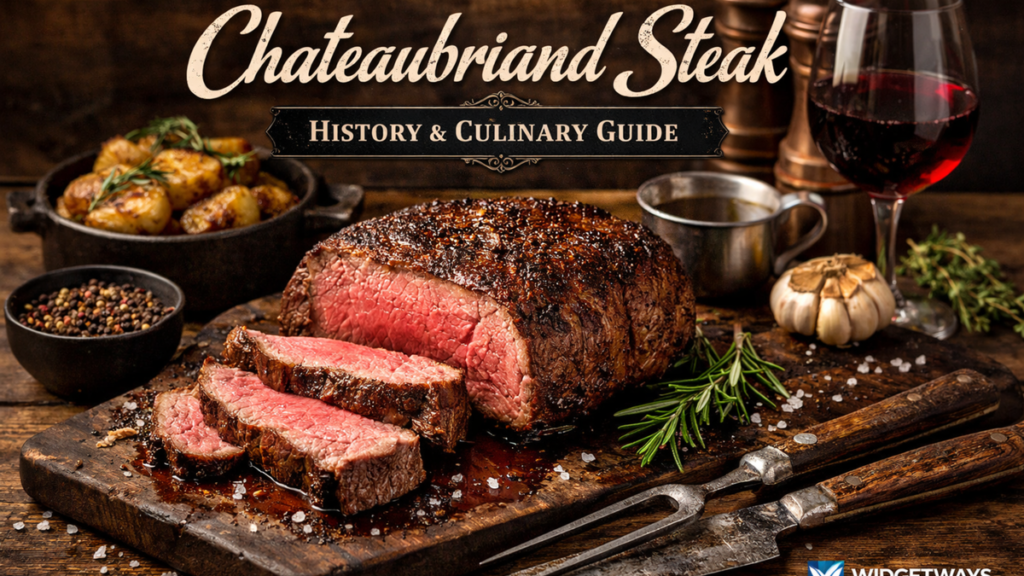

When diners see Chateaubriand on a restaurant menu, the name alone suggests grandeur. The dish refers to a thick center cut of beef tenderloin, typically roasted or grilled and served with sauces such as béarnaise alongside potatoes and vegetables. Today it is widely recognized as a luxurious steak designed for two, celebrated for its tenderness and refined presentation. Yet the origins of Chateaubriand reveal a far richer narrative involving aristocratic diplomacy, culinary innovation, and evolving definitions of what exactly the dish represents.
The story begins in early nineteenth-century France, where the dish was reportedly created by the personal chef of François-René de Chateaubriand, a writer, diplomat, and statesman. According to culinary tradition, the chef Montmireil devised the preparation around 1822 while Chateaubriand served as France’s ambassador to Britain.
In the centuries since, the meaning of “Chateaubriand” has shifted. What started as a method of preparing beef eventually became synonymous with the center cut of tenderloin itself. By the late nineteenth century, the term appeared in English cookbooks describing a luxurious steak cut thick enough for two people.
Today, Chateaubriand sits at the crossroads of tradition and interpretation. It is both a recipe and a symbol of French culinary heritage, appearing in classic cookbooks, Michelin-starred restaurants, and modern steakhouses alike. To understand Chateaubriand is to explore not just a cut of beef but a chapter in the cultural history of gastronomy.
The Origins of Chateaubriand in 19th-Century France
The origins of Chateaubriand intertwine with the life of François-René de Chateaubriand, a towering figure of French Romantic literature and politics. Born in 1768, he served as a diplomat and later as foreign minister under the Bourbon Restoration. During his diplomatic service in London around 1822, legend says his chef Montmireil invented a dish in his honor.
The original preparation was not simply a steak. Culinary historians suggest that Montmireil roasted a thick portion of beef between two lesser cuts of meat. The outer pieces protected the center from excessive heat, allowing it to remain tender and juicy. Once cooked, the sacrificial pieces were discarded, leaving a perfectly cooked interior portion.
Over time, the name “Chateaubriand” shifted from referring to a cooking technique to identifying the prized central portion of beef tenderloin itself. By the late nineteenth century, the term had entered English culinary vocabulary, signifying an exceptionally thick steak cut from the center of the fillet.
Food historian Paul Freedman once noted that classic French cuisine often blended storytelling with culinary technique. “Many famous dishes carry narratives that reflect the social prestige of the people associated with them,” he wrote, explaining why aristocratic names frequently appear in gastronomic traditions.
The result was a dish whose legend reinforced its prestige. Dining on Chateaubriand meant sharing not just a steak but a story about diplomacy, literature, and French aristocratic culture.
Read: JuicyOonga: Flavor, Benefits, Uses, and Growing Popularity
What Exactly Is Chateaubriand?
Despite its fame, Chateaubriand often causes confusion. Some chefs treat it as a specific cut of meat, while others consider it a recipe or presentation style.
At its most widely accepted definition today, Chateaubriand refers to a thick center portion of beef tenderloin weighing roughly 400 to 600 grams and typically served to two people.
This section of the tenderloin is prized for its delicate texture and mild flavor. Because the muscle does little work during the animal’s life, the meat remains exceptionally tender.
Food writer Albert Jack describes the dish succinctly: “Chateaubriand is less about complexity and more about showcasing the purity of beef.”
Key Characteristics of Chateaubriand
| Feature | Description |
|---|---|
| Cut location | Center of the beef tenderloin |
| Typical weight | 400–600 grams |
| Serving size | Usually serves two |
| Cooking method | Grilled, broiled, or roasted |
| Traditional accompaniments | Béarnaise sauce, chateau potatoes |
The dish is most commonly cooked medium rare, preserving its tenderness and flavor. Sauces and side dishes complement rather than overwhelm the meat.
From Aristocratic Table to Restaurant Classic
Chateaubriand’s journey from aristocratic dinner tables to restaurant menus reflects the broader evolution of European fine dining.
In nineteenth-century France, elaborate dishes associated with nobility gradually became codified through culinary literature. Cookbooks such as Georges Auguste Escoffier’s Le Guide Culinaire standardized many classical preparations, including steak dishes derived from the tenderloin.
Escoffier described Chateaubriand as a thick cut from the center of the trimmed fillet, ideally weighing no more than 500 grams to ensure even cooking.
The dish spread internationally during the rise of grand hotels and luxury restaurants in the late nineteenth and early twentieth centuries. French culinary techniques dominated high-end dining, and Chateaubriand became synonymous with refinement.
Chef Auguste Escoffier famously emphasized balance in classical cuisine. In his writings he suggested that Chateaubriand should be paired with simple garnishes such as sautéed potatoes and béarnaise sauce, allowing the quality of the beef to take center stage.
Today the dish remains a centerpiece of steakhouse culture worldwide, from Parisian bistros to New York dining rooms.
Traditional Preparation and Presentation
Cooking Chateaubriand requires careful technique. The goal is a deeply browned exterior and a tender, rosy center.
Classic preparation begins by seasoning the tenderloin with salt and pepper before searing it in a hot pan. The steak is then transferred to an oven to finish cooking.
Historically, the meat was sometimes served on wooden planks or silver platters with elaborate garnishes. Early twentieth-century cookbooks even recommended decorating the platter with piped mashed potatoes and stuffed vegetables.
Classic Components of a Chateaubriand Plate
| Element | Purpose |
|---|---|
| Beef tenderloin | Main centerpiece |
| Béarnaise sauce | Rich, buttery accompaniment |
| Château potatoes | Classic French potato garnish |
| Seasonal vegetables | Color and balance |
| Herb butter or jus | Additional flavor |
Chef Daniel Boulud once remarked in a culinary lecture that “a perfect Chateaubriand is the ultimate test of restraint: minimal seasoning, impeccable meat, and precise cooking.”
Because the dish highlights the quality of the beef, chefs often source premium cuts and age them carefully.
The Sauces That Define the Dish
Few elements define Chateaubriand more than the sauces served alongside it. Among them, béarnaise sauce reigns supreme.
Béarnaise is a derivative of hollandaise made with clarified butter, egg yolks, white wine vinegar, shallots, and tarragon. Its creamy texture and herbaceous flavor pair perfectly with lean tenderloin.
Other traditional accompaniments include:
• Red wine reduction
• Demi-glace
• Maître d’hôtel butter
• Shallot-wine sauces
French chef Fernand Point once wrote, “Sauce is the soul of French cooking,” a philosophy clearly reflected in dishes like Chateaubriand.
The interplay between the mild beef and aromatic sauces creates a balanced flavor profile that defines classical French gastronomy.
Chateaubriand in Modern Steakhouses
Although rooted in French tradition, Chateaubriand has become a global steakhouse staple.
Restaurants often present the dish dramatically. The steak arrives whole at the table, where servers slice it into thick portions for guests to share.
Modern interpretations may incorporate regional influences such as chimichurri in Argentina or truffle butter in European fine dining establishments.
Chef Thomas Keller has observed that “great steak dishes succeed because they combine simplicity with precision.” Chateaubriand exemplifies this philosophy, requiring excellent ingredients and disciplined technique.
Despite new interpretations, the core concept remains unchanged: a luxurious steak meant to be shared.
The Cultural Symbolism of Chateaubriand
Beyond the kitchen, Chateaubriand represents a cultural idea of indulgence and celebration.
In France, serving the dish historically signaled hospitality and prestige. It appeared at diplomatic dinners, holiday meals, and grand restaurant menus.
Food historian Jean-Robert Pitte notes that classical French cuisine often turned dishes into symbols of national identity. Chateaubriand’s name, linked to a celebrated writer and diplomat, reinforced this connection.
The dish also reflects the broader evolution of meat consumption. In earlier centuries, beef was relatively expensive, making large tenderloin cuts a luxury reserved for special occasions.
Even today, ordering Chateaubriand at a restaurant carries an air of ceremony.
Regional Variations Around the World
As Chateaubriand traveled across continents, chefs adapted it to local tastes.
In the United States, steakhouses often serve it with garlic mashed potatoes and rich sauces. In Britain, it may appear alongside Yorkshire puddings or roasted vegetables.
Some variations even depart significantly from the original. A well-known restaurant in Kolkata famously serves its version topped with a fried egg and onion gravy, illustrating how culinary traditions evolve across cultures.
Global Interpretations of Chateaubriand
| Region | Typical Variation |
|---|---|
| France | Béarnaise sauce, château potatoes |
| United States | Steakhouse plating with butter sauces |
| United Kingdom | Roast vegetables or traditional sides |
| Latin America | Chimichurri or grilled presentation |
| India | Adapted with local gravies and sides |
These adaptations highlight the dish’s flexibility while preserving its core identity.
Why Chateaubriand Remains a Culinary Icon
Few dishes demonstrate the enduring power of classical cuisine like Chateaubriand.
Part of its appeal lies in its simplicity. Unlike heavily seasoned preparations, the dish relies on premium ingredients and precise cooking.
Food critic Ruth Reichl once wrote that “the best dishes are often those that allow ingredients to speak for themselves.” Chateaubriand embodies this philosophy.
The dish also retains a romantic narrative. Its association with diplomacy, literature, and aristocratic culture adds historical depth.
Even as global food culture evolves, Chateaubriand continues to symbolize elegance and tradition.
Takeaways
- Chateaubriand originated in early nineteenth-century France and is traditionally linked to writer and diplomat François-René de Chateaubriand.
- The dish was reportedly created by his personal chef Montmireil around 1822.
- Today it refers to a thick center cut of beef tenderloin, typically served for two people.
- Classical preparations feature béarnaise sauce and château potatoes.
- The dish evolved from a cooking technique into a specific steak cut.
- Chateaubriand remains a staple of fine dining and steakhouse menus worldwide.
Conclusion
Chateaubriand occupies a unique place in culinary history. At first glance it appears to be simply a luxurious steak, but its origins reveal a deeper narrative woven through literature, diplomacy, and French gastronomy.
From the kitchens of nineteenth-century aristocrats to modern restaurant dining rooms, the dish has evolved while preserving its essential character. Its defining qualities remain the same: exceptional beef, careful preparation, and an understated elegance that allows flavor to shine.
Perhaps this is why Chateaubriand endures. In an era of increasingly experimental cuisine, the dish represents something timeless. It reminds diners that culinary excellence does not always require complexity. Sometimes, the most memorable meals are those built on a single, beautifully prepared ingredient.
Two centuries after its creation, Chateaubriand continues to embody the ideals of classical cooking. It is not merely a steak but a culinary tradition passed from one generation of chefs and diners to the next.
FAQs
What cut of meat is Chateaubriand?
Chateaubriand typically comes from the center portion of the beef tenderloin. This section is extremely tender and usually thick enough to serve two people.
Is Chateaubriand a recipe or a cut of meat?
Originally it referred to a cooking method, but over time the name became associated with the center-cut tenderloin steak itself.
Why is Chateaubriand considered expensive?
The tenderloin is one of the most tender and limited muscles in the animal, making it a premium cut of beef.
What sauce traditionally accompanies Chateaubriand?
Béarnaise sauce is the classic accompaniment, though red wine reductions and herb butters are also common.
How is Chateaubriand usually cooked?
It is typically seared and then roasted or grilled until medium rare, preserving the tenderness of the meat.
References
Ayto, J. (2012). The diner’s dictionary: Word origins of food and drink. Oxford University Press.
Encyclopaedia Britannica. (2025). Chateaubriand (dish). https://www.britannica.com/topic/chateaubriand
Escoffier, A. (1903/2011). Le guide culinaire. Mayflower Books.
Freedman, P. (2016). Ten restaurants that changed America. Liveright Publishing.
Jack, A. (2011). What Caesar did for my salad: The curious stories behind our favorite foods. Penguin.
Larousse Gastronomique Editorial Committee. (2001). Larousse gastronomique. Clarkson Potter.
Wikipedia contributors. (2024). Chateaubriand (dish). https://en.wikipedia.org/wiki/Chateaubriand_(dish)
Wikipedia contributors. (2024). François-René de Chateaubriand. https://en.wikipedia.org/wiki/Fran%C3%A7ois-Ren%C3%A9_de_Chateaubriand