
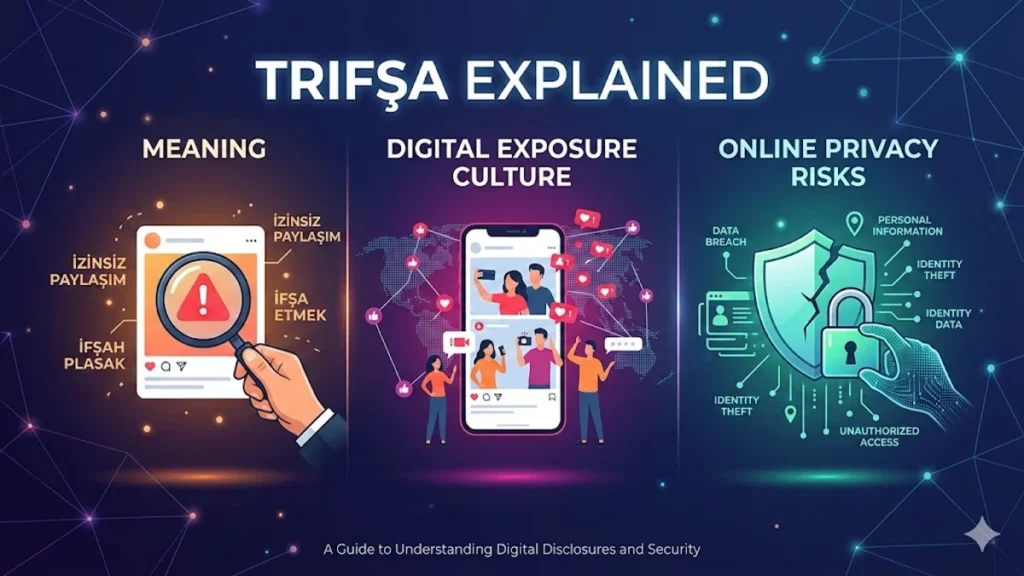

The word “trifşa” has become increasingly visible in online conversations across social media platforms, messaging forums, and digital communities. Broadly speaking, the term refers to the act of publicly exposing private information, personal conversations, or alleged wrongdoing online. For many users searching the term today, the question is simple: what does trifşa mean, and why has it become such a powerful, controversial phenomenon on the internet?
In the first moments after a post goes viral, trifşa can resemble digital accountability. Screenshots circulate. Names trend. Stories spread quickly across platforms like Twitter, TikTok, or messaging apps. Supporters often frame the act as revealing truth or warning others about harmful behavior. Critics, however, argue that trifşa can rapidly turn into digital vigilantism, where accusations spread faster than verification.
The internet has always been a place where information travels quickly, but the scale of exposure today is unprecedented. A single post can reach millions within hours. Algorithms amplify emotionally charged content. Online communities mobilize instantly around allegations, conflicts, or controversies.
In this environment, trifşa has evolved into a complex cultural phenomenon. Sometimes it functions as a form of whistleblowing or public accountability. In other cases it becomes harassment, doxxing, or reputational destruction without due process. The line between justice and harm often depends on context, evidence, and the motivations behind exposure.
Exploring trifşa requires understanding not only digital behavior but also deeper questions about privacy, ethics, and the power structures embedded in modern platforms. The internet has created new ways to reveal truth, but it has also created new ways to destroy lives in the process.
The Origins of the Term and Its Digital Evolution
The term trifşa, used in several online communities particularly in Turkish-language internet culture, refers to exposing someone’s secrets, private messages, or hidden behavior publicly. While the word itself has older linguistic roots related to disclosure or revelation, its modern meaning has been shaped almost entirely by social media dynamics.
In the early days of internet forums in the 2000s, online exposure typically appeared in niche communities. Screenshots or leaked messages circulated within small groups. The impact remained limited because distribution channels were smaller and slower.
The transformation came with the rise of large social platforms. By the 2010s, services such as Twitter, Facebook, and Reddit enabled rapid viral spread of personal information and accusations. A single thread could trigger widespread discussion across thousands of users.
Digital culture scholars have observed that exposure culture thrives in environments where formal accountability systems appear slow or ineffective. Individuals may turn to public exposure when they believe institutions cannot address harm quickly enough.
As media theorist Whitney Phillips noted in her research on online outrage cycles, viral callouts can create powerful collective narratives. She writes that “networked outrage spreads because emotional reactions travel faster than contextual information” (Phillips, 2018).
This dynamic helps explain why trifşa events can escalate quickly, even before the facts are fully established.
Read: Framevuerk: The Future of Intelligent Visual Frameworks
Why Trifşa Happens: Motivations Behind Digital Exposure
People engage in trifşa for a wide variety of reasons, ranging from activism to revenge. In some cases, individuals expose abusive or manipulative behavior that might otherwise remain hidden. Survivors of harassment or misconduct sometimes use public exposure as a way to warn others.
However, exposure can also emerge from personal conflicts. Private disputes, relationship breakdowns, or social rivalries sometimes escalate into public revelations when screenshots or personal conversations are shared online.
Psychologists studying online behavior point to several motivations behind digital exposure. One is moral outrage. When individuals believe they are confronting injustice, they may feel justified in sharing information widely.
Another factor is social reward. Viral exposure posts often attract attention, validation, and followers. Digital environments can encourage users to participate in public callouts because engagement metrics reward dramatic narratives.
Technology researcher danah boyd has emphasized that social media platforms amplify emotional storytelling because algorithms prioritize content that generates interaction (boyd, 2014). In practice, that often means controversial or accusatory posts spread more quickly than cautious reporting.
These incentives create an environment where exposure becomes both a tool of accountability and a form of digital spectacle.
Digital Exposure vs Whistleblowing
Although trifşa can resemble whistleblowing, the two practices differ significantly in structure and legal protection. Whistleblowing typically involves reporting wrongdoing through formal channels, such as investigative journalism or regulatory bodies.
Trifşa, by contrast, often bypasses institutions entirely. Information is shared directly with the public through social media or messaging platforms. This immediacy can accelerate awareness of wrongdoing but also increases the risk of misinformation.
The difference becomes clearer when comparing their characteristics.
| Feature | Whistleblowing | Trifşa |
|---|---|---|
| Reporting Channel | Journalists, regulators, institutions | Social media platforms |
| Verification Process | Investigative fact checking | Often limited or absent |
| Legal Protections | Some whistleblower laws | Usually none |
| Speed of Exposure | Slower but structured | Immediate and viral |
| Potential Risks | Institutional retaliation | Public backlash or harassment |
Whistleblowing investigations often take months or years to verify evidence. Digital exposure, however, can unfold within minutes.
This difference raises important questions about fairness. Without careful verification, exposure campaigns can target individuals who have not had an opportunity to respond.
The Psychology of Viral Accusations
Online exposure campaigns frequently follow predictable emotional patterns. Social scientists studying digital outrage have observed that viral accusations often spread through what researchers call “moral contagion.”
A 2017 study published in Nature Human Behaviour found that expressions of moral outrage are more likely to be shared on social media than neutral information (Brady et al., 2017). Each additional exposure increases the likelihood that others will amplify the message.
This psychological process helps explain how trifşa incidents escalate rapidly. As more users react with anger or shock, algorithms push the content to wider audiences.
Dr. Molly Crockett, a neuroscientist studying moral decision-making, has warned that online environments can distort ethical judgment. She noted in a 2017 interview with The Guardian that “platform design can reward moral outrage in ways that intensify social conflict.”
The result is a digital ecosystem where emotionally charged accusations often outrun careful verification.
When Exposure Reveals Real Harm
Despite its risks, digital exposure has occasionally played a role in revealing serious misconduct. The #MeToo movement is one example of how public testimonies can bring attention to systemic problems.
Beginning in 2017, thousands of individuals shared personal experiences of harassment and abuse online. These stories led to investigations, resignations, and broader cultural conversations about workplace power dynamics.
Exposure in these contexts functioned as collective testimony rather than isolated accusation. Survivors found strength in numbers, and journalists often investigated claims before publishing major reports.
Legal scholar Danielle Citron has argued that online exposure can serve an important role in confronting abuse when institutions fail to respond. However, she also emphasizes that digital accountability must balance transparency with protection from harassment (Citron, 2014).
The challenge lies in distinguishing between responsible exposure and harmful rumor.
Risks and Consequences of Trifşa
Public exposure carries profound consequences for everyone involved. Once personal information spreads online, it can remain searchable for years. Even false accusations can damage reputations permanently.
One common risk is doxxing, the release of private identifying information such as addresses or phone numbers. Doxxing can expose individuals to harassment or physical threats.
Another danger is misinformation. Screenshots can be edited or taken out of context, creating misleading narratives that spread quickly before corrections appear.
Digital ethics researchers emphasize that online accusations rarely include the procedural safeguards found in legal systems. There is often no clear standard of evidence, no impartial investigation, and no structured opportunity for defense.
The result is what some scholars call “trial by algorithm,” where reputation is shaped by viral momentum rather than verified facts.
Platform Responses and Moderation Challenges
Major technology companies have attempted to address harmful exposure practices through moderation policies. Platforms like Twitter, Facebook, and TikTok prohibit sharing private personal information without consent.
However, enforcing these rules remains difficult. Exposure content often appears in screenshots or coded language that automated systems struggle to detect.
Additionally, platform moderators must balance competing priorities. Removing exposure posts may protect privacy but could also silence legitimate whistleblowing.
The scale of content moderation complicates the problem further. According to Meta’s transparency reports, millions of pieces of harmful content are removed each quarter, yet many posts remain online long enough to spread widely before intervention.
These structural challenges highlight how exposure culture interacts with the architecture of digital platforms.
The Timeline of Exposure Culture Online
The evolution of digital exposure can be traced through several key moments in internet history.
| Year | Event | Impact |
|---|---|---|
| Early 2000s | Online forums host anonymous callout threads | Limited exposure within niche communities |
| 2010 | Rise of Twitter activism | Rapid spread of accusations and accountability campaigns |
| 2014 | Gamergate controversy | Major debate over harassment and digital mob behavior |
| 2017 | #MeToo movement | Global exposure of sexual misconduct |
| 2020s | TikTok and viral screenshot culture | Exposure becomes mainstream social media practice |
Each stage reflects shifts in technology, audience size, and cultural expectations about accountability.
Expert Perspectives on Digital Exposure
Researchers and legal scholars continue to debate the ethical implications of exposure culture.
Media scholar Whitney Phillips has argued that online outrage cycles often obscure nuance. She writes that “viral outrage simplifies complex situations into narratives of heroes and villains” (Phillips, 2018).
Legal expert Danielle Citron emphasizes the importance of protecting individuals from digital harassment while still allowing victims to speak publicly. She has noted that online abuse can silence victims as effectively as censorship.
Meanwhile, sociologist Zeynep Tufekci has observed that networked platforms accelerate collective action but also amplify misinformation when information spreads faster than verification (Tufekci, 2017).
Together, these perspectives illustrate the tension at the center of trifşa culture: the desire for transparency colliding with the risks of unchecked exposure.
Takeaways
- Trifşa refers to the public exposure of private information or alleged wrongdoing online.
- Social media platforms accelerate exposure through viral sharing and algorithmic amplification.
- Exposure can sometimes reveal real misconduct but may also spread misinformation.
- Unlike whistleblowing, trifşa rarely involves formal verification processes.
- Digital exposure carries long-term consequences for reputation and privacy.
- Platforms struggle to moderate exposure content while protecting legitimate speech.
Conclusion
Digital exposure culture reflects the evolving relationship between technology, accountability, and privacy. The internet has empowered individuals to reveal truths that might otherwise remain hidden. Yet it has also created an environment where accusations travel faster than verification.
Understanding trifşa requires recognizing both sides of this dynamic. Public exposure can bring attention to injustice, particularly when traditional institutions fail to act. At the same time, the speed and scale of social media can transform exposure into something far more destructive.
The challenge for digital society is not simply to suppress exposure but to cultivate more responsible forms of transparency. That means encouraging verification, protecting victims, and discouraging harassment masquerading as accountability.
In the coming years, debates about privacy, reputation, and digital ethics will continue to shape how exposure culture evolves. The question is no longer whether trifşa will exist online. It is how societies choose to navigate the power it represents.
FAQs
What does trifşa mean?
Trifşa refers to publicly exposing private information, personal conversations, or alleged wrongdoing online, usually through social media platforms.
Is trifşa illegal?
It depends on the situation. Sharing private information without consent can violate privacy or harassment laws in some jurisdictions.
How is trifşa different from whistleblowing?
Whistleblowing typically involves reporting misconduct through formal investigative channels, while trifşa spreads information directly through social media.
Why do exposure posts go viral quickly?
Social media algorithms often amplify emotionally charged content, especially posts that provoke anger or outrage.
Can someone recover from online exposure?
Recovery is possible but difficult. Reputation damage from viral exposure can persist because online content often remains searchable.