
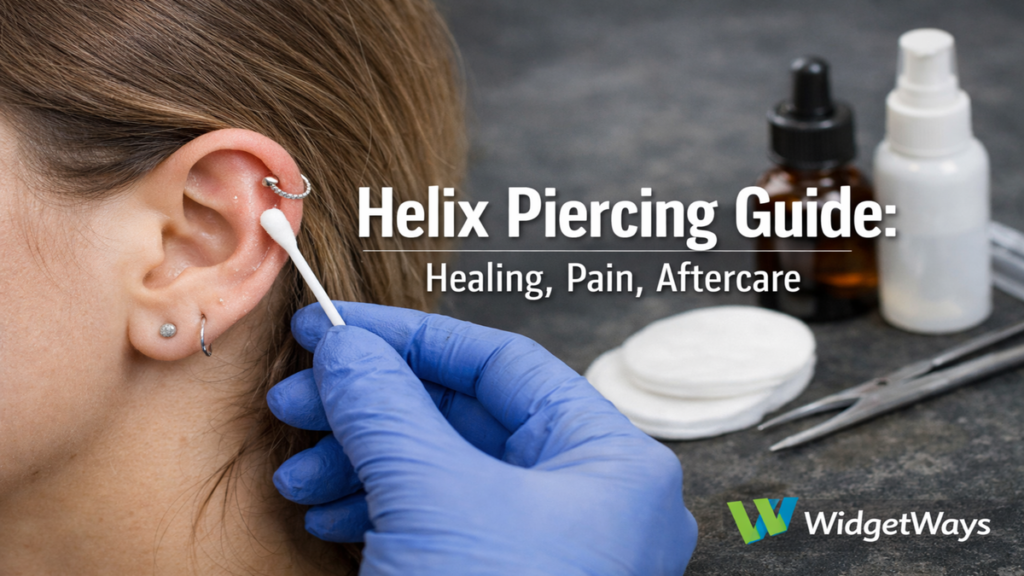

I have often noticed that the smallest changes to the body can carry the most meaning, and a helix piercing is a clear example of that quiet transformation. At its simplest, a helix piercing is a perforation made through the upper cartilage of the ear’s outer rim. It is widely considered one of the most popular cartilage piercings, favored for its subtlety and versatility. The basic facts are straightforward: the procedure is quick, the pain is manageable, and the healing period typically ranges from several months to nearly a year. Yet behind this simplicity lies a more intricate reality shaped by anatomy, hygiene, and personal expression.
The reason helix piercings demand attention is not just aesthetic but biological. Unlike the soft tissue of the earlobe, cartilage has limited blood flow, which slows healing and increases sensitivity to irritation. This difference means that a helix piercing is less forgiving than it appears. It requires deliberate aftercare, patience, and an understanding of how the body repairs itself. At the same time, its popularity reflects a broader cultural shift toward curated, intentional self-styling, where even a single piercing can become part of a larger visual narrative. In this way, the helix piercing sits at the intersection of science and identity, where the body becomes both canvas and subject.
The Structure of Cartilage and Why It Matters
The defining feature of a helix piercing is its placement in cartilage, a firm yet flexible connective tissue that forms the outer structure of the ear. Cartilage differs significantly from the soft tissue of the earlobe, primarily because it lacks a direct blood supply. Instead, it relies on diffusion from surrounding tissues to receive nutrients and oxygen. This limited circulation is the central reason why cartilage piercings take longer to heal and are more susceptible to complications.
When cartilage is pierced, the body initiates an inflammatory response. White blood cells are sent to the site to prevent infection, and new tissue begins to form around the jewelry. However, because the process is slower than in vascularized tissue, any disruption such as friction, pressure, or contamination can interfere with healing. This is why activities that seem harmless, like sleeping on the pierced ear or frequently adjusting jewelry, can prolong recovery.
Medical professionals often emphasize that cartilage injuries, even minor ones like piercings, must be treated with care. The structural nature of cartilage means that damage is not easily reversed, and improper healing can lead to deformities or persistent irritation. Understanding this biological context transforms the helix piercing from a simple cosmetic procedure into a process that requires respect for the body’s limitations.
The Piercing Process in Detail
The act of getting a helix piercing is relatively brief, but it is a procedure that demands precision and sterile technique. A trained piercer begins by cleaning the ear thoroughly and marking the exact placement of the piercing. This step is more important than it may appear, as even slight misalignment can affect both aesthetics and comfort.
A hollow, single-use needle is then used to create the piercing. Unlike piercing guns, which are sometimes used for earlobes, needles are preferred for cartilage because they produce a clean incision rather than blunt force. This reduces trauma to the tissue and allows for more accurate placement. Once the needle passes through the cartilage, the chosen jewelry is inserted immediately.
The sensation is often described as a quick, sharp pinch followed by a dull pressure. While discomfort varies from person to person, it is generally tolerable and short-lived. What follows, however, is a longer period of adjustment as the body begins to heal. The initial hours may involve mild swelling and warmth, which gradually subside as the body stabilizes the area.
Professional standards in piercing have evolved significantly over the years, with an increasing emphasis on hygiene and technique. Organizations such as the Association of Professional Piercers advocate for strict sterilization protocols and proper training, reinforcing the idea that a helix piercing should always be performed in a controlled, professional environment.
Healing as a Gradual Biological Process
Healing a helix piercing is not a single event but a progression that unfolds over time. The early phase is characterized by inflammation, during which the body responds to the trauma of the piercing. Redness, swelling, and tenderness are common during this stage, and they typically diminish within a few weeks. However, this visible improvement can be misleading, as deeper tissue repair continues long after surface symptoms fade.
As healing progresses, the body forms a channel of epithelial tissue around the jewelry, stabilizing the piercing. This stage requires careful maintenance, as the tissue is still fragile and prone to irritation. Any disruption, whether from physical contact or environmental exposure, can delay the process or lead to complications.
Complete healing can take anywhere from six to twelve months, depending on individual factors such as immune response, lifestyle, and adherence to aftercare routines. During this time, patience becomes essential. Changing jewelry too early or neglecting cleaning routines can undo progress and extend the healing period.
The gradual nature of healing highlights the importance of consistency. Unlike more forgiving piercings, the helix demands ongoing attention, reinforcing the idea that the procedure is not complete when the needle is removed but only when the body has fully adapted to the change.
Jewelry and Its Influence on Healing and Style
Jewelry selection plays a dual role in helix piercings, affecting both the healing process and the final aesthetic outcome. Initial jewelry is typically a small stud, chosen for its stability and minimal movement. This design reduces the risk of irritation and allows the tissue to heal without unnecessary stress.
Materials are equally important. Implant-grade titanium is widely recommended because it is biocompatible and unlikely to cause allergic reactions. High-quality gold is also suitable, provided it meets purity standards. Inferior materials can introduce irritants or bacteria, increasing the likelihood of complications.
As healing progresses, individuals often explore different styles, including hoops, barbells, and decorative rings. Each option offers a distinct visual effect, allowing for personalization and creativity. However, transitioning to new jewelry should be done cautiously and only after sufficient healing has occurred.
The relationship between jewelry and healing underscores a broader principle. In body modification, aesthetic choices are inseparable from biological considerations. The most visually appealing option is not always the safest during the early stages, and balancing these factors is key to achieving a successful outcome.
Cultural Significance and Modern Expression
Helix piercings have moved far beyond their origins as a niche form of body modification. Today, they are part of a broader cultural movement that embraces individuality and curated self-expression. The rise of social media has amplified this trend, showcasing intricate ear designs that combine multiple piercings into cohesive arrangements.
Historically, ear piercings have appeared in various cultures, often carrying symbolic meanings related to status, spirituality, or identity. In contemporary contexts, the helix piercing represents a blend of tradition and modernity. It is both a continuation of ancient practices and a reflection of current fashion sensibilities.
The concept of the “curated ear” has become particularly influential, encouraging individuals to think of their ear as a canvas. Multiple piercings are arranged intentionally, creating patterns that reflect personal style. This approach transforms the helix piercing from a standalone feature into part of a larger visual narrative.
Cultural acceptance has also evolved. What was once considered unconventional is now widely embraced, appearing in professional settings and mainstream fashion. This shift reflects changing attitudes toward body modification, where personal expression is increasingly valued.
Risks and the Importance of Prevention
Despite their popularity, helix piercings carry inherent risks that must be acknowledged. Infection remains the most common concern, often resulting from improper aftercare or exposure to bacteria. Because cartilage has limited blood flow, infections in this area can be more severe and slower to resolve.
Another potential complication is the formation of hypertrophic scars or keloids. These raised growths can develop around the piercing site, particularly in individuals with a genetic predisposition. While not dangerous, they can be aesthetically concerning and may require medical intervention.
Mechanical irritation is another factor that can disrupt healing. Pressure from sleeping, tight headwear, or frequent touching can cause inflammation and prolong recovery. In some cases, prolonged irritation can lead to migration or rejection of the jewelry.
Preventive measures focus on hygiene and minimizing trauma. Regular cleaning with saline solution, avoiding unnecessary contact, and following professional guidance are essential practices. These steps not only reduce the risk of complications but also support the body’s natural healing process.
Aftercare as a Discipline
Aftercare is the defining element of a successful helix piercing. It involves more than occasional cleaning; it requires a consistent routine that supports the body’s ability to heal. Cleaning the piercing twice daily with a sterile saline solution helps remove debris and prevent bacterial buildup.
Equally important is what should be avoided. Harsh chemicals such as alcohol and hydrogen peroxide can damage tissue and delay healing. Similarly, unnecessary handling introduces bacteria and increases the risk of irritation.
Environmental factors also play a role. Swimming in untreated water, using unclean pillowcases, or exposing the piercing to dirt can compromise healing. Maintaining a clean environment and being mindful of daily habits contribute significantly to the outcome.
Aftercare is not a temporary obligation but an ongoing commitment. The discipline required mirrors the broader theme of responsibility in body modification, where the decision to alter the body comes with the responsibility to care for it properly.
Takeaways
- Helix piercings involve cartilage, making them slower to heal than lobe piercings.
- The procedure is quick, but healing requires months of consistent care.
- Proper technique and sterile equipment are essential for safety.
- Jewelry choice directly affects both healing and comfort.
- Aftercare routines play a critical role in preventing complications.
- Cultural trends have transformed helix piercings into a form of personal expression.
Conclusion
I have come to see helix piercings as more than a simple aesthetic choice. They represent a careful balance between biology, discipline, and personal expression. The process begins with a quick procedure but unfolds over months of healing, during which the body adapts to a deliberate change. This journey reflects a broader truth about body modification, where the visible result is only one part of the story.
The enduring appeal of helix piercings lies in their versatility. They can be understated or elaborate, singular or part of a larger design. Yet regardless of style, their success depends on an understanding of the body’s needs and limitations. In this sense, the helix piercing becomes a collaboration between intention and biology.
Ultimately, it is this combination of meaning and process that gives the helix piercing its significance. It is not just an ornament but a reflection of how individuals choose to shape and care for their own bodies.
Read: Can Dogs Eat Strawberries? Safety Guide
FAQs
How long does a helix piercing take to heal fully?
Healing typically takes six to twelve months, depending on aftercare and individual healing rates.
Is a helix piercing more painful than a lobe piercing?
Yes, it is generally more painful due to the cartilage, though the discomfort is brief.
Can I change the jewelry early?
It is not recommended. Changing jewelry too soon can disrupt healing and cause irritation.
What should I use to clean a helix piercing?
A sterile saline solution is the safest and most commonly recommended option.
Are infections common with helix piercings?
They are not common with proper care, but the risk exists due to the nature of cartilage tissue.
References
American Academy of Dermatology Association. (n.d.). Body piercing: What you should know. https://www.aad.org
Association of Professional Piercers. (n.d.). Aftercare guidelines. https://safepiercing.org
Mayo Clinic. (n.d.). Body piercing risks. https://www.mayoclinic.org
Armstrong, M. L., & Roberts, A. E. (2004). Contemporary college students and body piercing. Journal of Adolescent Health, 35(1), 58–61.
Stirn, A. (2003). Body piercing: Medical consequences and psychological motivations. The Lancet, 361(9364), 1205–1215.